The SAVEDpreneur™ Spotlight: Nicole Stewart, Founder of National Association of Black Microschool Leaders (NABML)
Looking back now, I really believe God knew I would need Him. He knew I would need a friend, a guide, and a Savior — someone I could call on through every season of my life. And so He met me there that day. And I’ve been grateful for that encounter ever since.

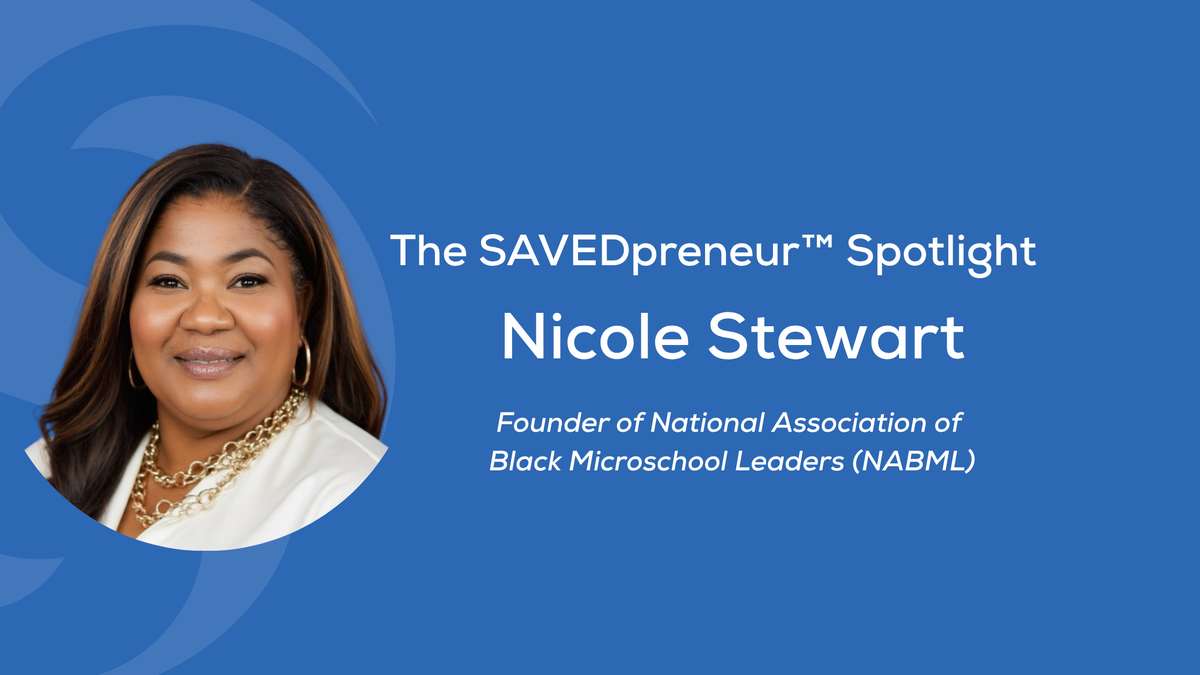
Nicole Stewart thought she was called to teach. And she was — but not just in the way she imagined. After years in the classroom and a growing frustration with a system that made it harder and harder to reach students the way they deserved, she prayed a simple prayer: God, how can I help? What followed was a journey from teacher to administrator to entrepreneur to founder — and eventually to a moment sitting in her own microschool where she heard one word from God that changed everything: multiply.
Let's lean in.
Tell us who you are and what is your God-driven purpose?
I’m an educator who was called to something bigger than the classroom.
As a child, I had some incredible teachers who poured into me, believed in me, and made learning feel powerful. That experience made me want to do the same, so I became a teacher. But after a while, I started to realize the system had shifted in ways that made it harder and harder to show up the way my students deserved. So I prayed a simple question: God, how can I help?
That prayer led me from teaching into administration, then into education consulting, and eventually to opening my own microschool. When I opened that school, I really believed I had finally arrived. Then one day, sitting in my school and marveling at what God had built, I heard Him say clearly: “This is not it. Multiply.”
That moment became the beginning of the National Association of Black Microschool Leaders. My purpose shifted from building one school to helping others build schools — because microschools have always been part of our community. Long before large institutional systems existed, Black communities educated our children in small, community-centered spaces. This work is about reclaiming something that has always belonged to us.
What was your first encounter with God and how did you know you were saved?
My first real encounter with God happened when I was about eight years old, and it came through an unlikely source — my cousin, who was often my babysitter. She struggled with addiction then and still does now, but one day she decided to take me to church. Not our family church, but a different one.
My family were what people sometimes call “holiday churchgoers,” so sitting in that service felt different. I had heard preachers talk about God before, but that day was the first time I actually felt Him. The best way I can describe it is that it felt like God introduced Himself to me — like meeting someone for the first time who immediately felt familiar, like a friend who would never leave.
Even as an eight-year-old, I felt an overwhelming sense of joy and connection. Looking back, I believe God knew I would need Him through every season of life, and so He met me there that day. I have been grateful for that encounter ever since.
Many of us want to be successful. What does success mean to you?
When I think about success, I ask myself a few questions. Am I at peace? Do I feel joy — not that every day is easy, but is there a genuine sense of fulfillment in the work? Is there fruit? Are lives being impacted? And most importantly, am I in the will of God?
I’m not measuring titles or recognition. If peace, joy, fruit, and obedience are present, then I feel successful.
If you could partner with anyone to fulfill your vision, who would you work with and why?
I’d say churches. For generations, the church has been far more than a place of Sunday worship — it has been where communities gather, organize, learn, and take care of each other. From freedom schools during the Civil Rights Movement to after-school programs today, the church has always been part of educating our children.
A lot of churches already have classrooms and fellowship halls that sit empty during the week. Those spaces could easily become small learning environments where students are supported academically, culturally, and spiritually. Every church doesn’t have to start a school, but churches can support the microschool movement by building one, offering space, or forming partnerships. Our nonprofit is structured to support that work through training and networks.
What does being a SAVEDpreneur™ mean to you? What is your kingdom assignment and how are you carrying out your assignment now?
Being a SAVEDpreneur™ means my faith and my work are not separate things. It means listening for God’s guidance, being obedient even when the path doesn’t make sense, and trusting that the work is part of a bigger purpose.
My Kingdom assignment is to help reclaim education in our communities. Through NABML, I support and connect educators, founders, and community leaders who are building microschools. The goal is not one school — it is many schools rooted in faith, community, culture, and possibility. I carry that out by equipping other leaders with the support and resources they need to build learning environments designed with our children in mind.
What did God call you to build, and how did you know? What steps did you take to be obedient? How quickly did it take you to answer the call?
God called me to help rebuild an educational ecosystem in the Black community — and I knew it the moment I heard that single word while sitting in my microschool: multiply.
Obedience came quickly. Earlier in my life I had experienced what happens when you walk in disobedience, so at this point saying yes feels much more natural. As soon as I understood the assignment, I created a plan and started moving. Within just a few months we had connected with almost 50 schools and began building a network and training leaders.
God is deliberate. He is faithful. And He prepared me for that moment by first allowing me to build my own school — so I could imagine what multiplication would look like because I had already experienced the process myself.
Where did obedience cost you something—money, time, identity, approval? And how did you handle the tension?
Obedience cost me security. Stepping away from the traditional education system meant leaving behind stability, steady income, and the approval that comes with a clear career path. It also cost me identity — for a long time I saw myself simply as a teacher, and letting go of that to step into something undefined was uncomfortable.
When you’re walking in a calling that other people can’t see yet, it can feel lonely. But I handled that tension by leaning into my faith and trusting God’s direction. I had already seen what ignoring that guidance costs. And I had learned that obedience ultimately leads to peace, even when the path is hard. Every step of letting go was preparing me for the work I’m doing today.
What upcoming projects are you working on that you want our readers to know about?
We just launched our Black Microschool Directory at nabml.org, which allows families to find Black-led microschools in their communities. One of the biggest challenges families face is simply knowing these schools exist, so the directory makes them more visible and accessible.
We’re also launching Community Design Days — events where we come into a community and facilitate conversations about education. We bring parents, students, church leaders, educators, and city and state officials together and ask one simple but powerful question: What kind of schools do you want for your children? From there, we guide the community through designing what local education could look like. Organizations and communities can invite us to facilitate those conversations. Learn more at nabml.org.
What is the best way for our readers to keep up with you?
Websites: www.nabml.org | www.blkled.com